
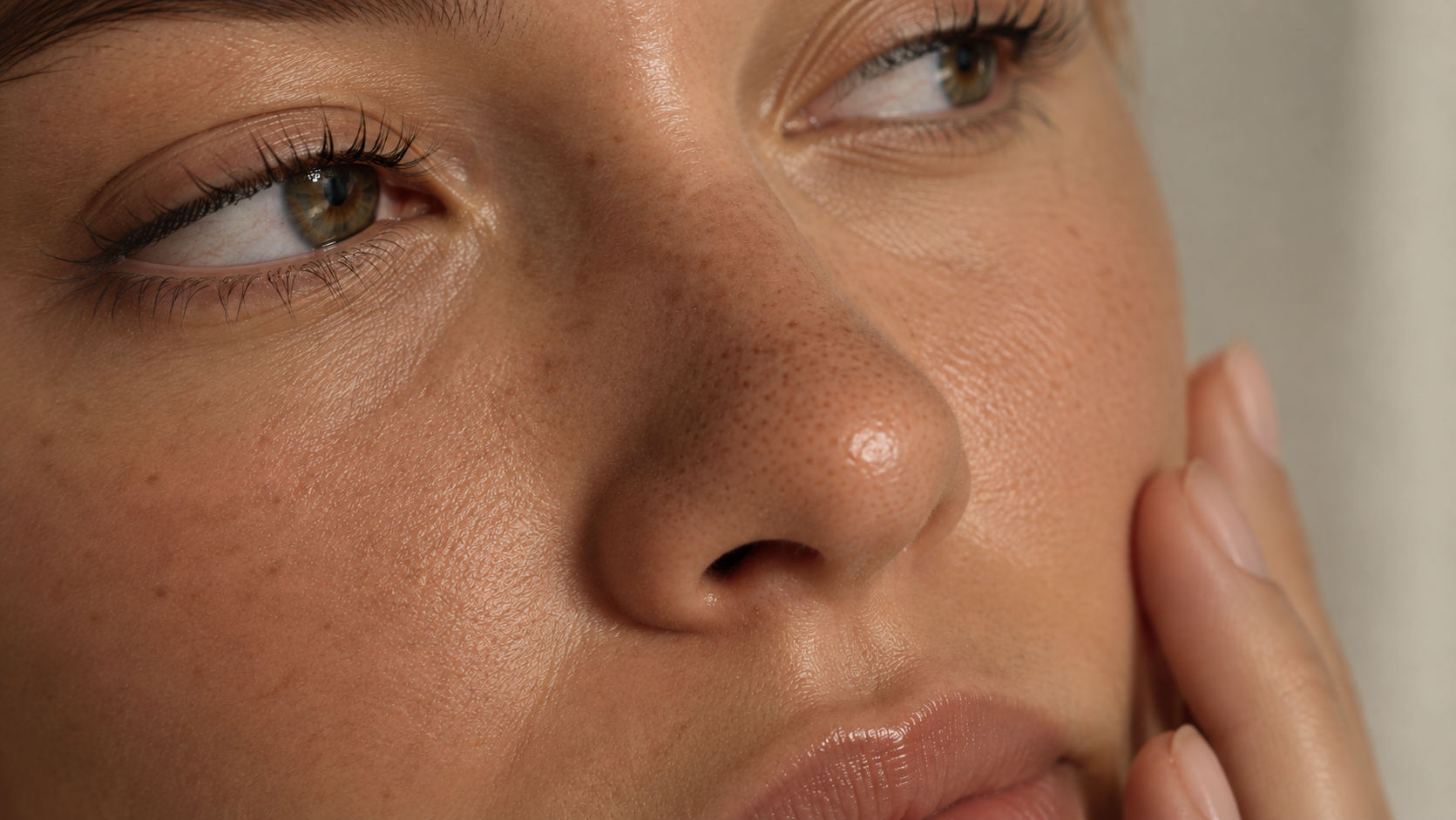
those little dots on your nose that never seem to go away? they might not be blackheads after all.
if you’ve ever looked closely at your skin and wondered why your pores seem to refill even after a thorough cleanse or extraction, you’re not alone. one of the most common skincare misconceptions is that every visible pore or dark spot needs to be cleared out.
but here’s the thing: not everything in your pores is a breakout waiting to happen.
let’s talk about sebaceous filaments, how they differ from blackheads. and how to care for your skin without disrupting its natural balance
what are sebaceous filaments?
sebaceous filaments are a completely normal part of your skin. they help guide sebum, your skin’s natural oil, from the sebaceous glands toward the surface through your pores.
sebum plays an important role in maintaining your skin’s moisture and protective barrier. sebaceous filaments help that oil move where it needs to go.
they’re especially noticeable around the nose, chin, and forehead, where oil production tends to be more prominent.
you may notice that they:
appear as tiny, relatively uniform dots
look light gray, tan, yellowish, or skin colored
are most noticeable around the t-zone
become visible again after extractions because they’re a normal feature of your skin
in other words, sebaceous filaments aren’t something you need to eliminate. they’re part of how your skin functions.
so, how are blackheads different?
although they can look similar, sebaceous filaments and blackheads aren’t quite the same.
blackheads are a type of acne called an open comedone. they form when oil and dead skin cells accumulate inside a pore, and the exposed material darkens through oxidation and other chemical changes.
sebaceous filaments, on the other hand, are normal structures that help transport oil to the skin’s surface.
here’s a quick comparison:
sebaceous filaments
usually small and relatively uniform in appearance
often found across the nose and other oilier areas
typically lighter in color
naturally refill because they’re part of normal skin function
blackheads
may appear darker and more distinct
can vary in size and are often less uniform
form when a pore becomes clogged with oil and dead skin cells
may improve with an appropriate acne-focused skincare routine
it’s possible that you have both at the same time. if you’re unsure what you’re seeing, an esthetician or dermatologist can help you better understand your skin.
why do sebaceous filaments keep coming back?
ever extracted the tiny dots on your nose, only to notice them again a few days later?
that’s because removing the visible contents of a sebaceous filament doesn’t remove the structure itself. your skin continues producing sebum, and the filaments continue doing their job.
trying to remove every last dot can lead to unnecessary irritation, redness, and damage to your skin barrier.
the goal isn’t to achieve completely invisible pores. pores are a normal part of skin, and their appearance varies from person to person.
instead, focus on keeping your skin comfortable, balanced, and healthy.
how to care for sebaceous filaments
the best approach is usually a consistent routine with gentle cleansing, appropriate exfoliation, and plenty of hydration.
1. cleanse without stripping your skin
a gentle cleanser can help remove excess oil, sunscreen, makeup, and everyday buildup without leaving your skin feeling tight or uncomfortable.
you don’t need to scrub aggressively or wash your face repeatedly to keep your pores clean. over-cleansing can irritate your skin and interfere with its protective barrier.
2. consider gentle chemical exfoliation
ingredients such as salicylic acid can help loosen the buildup of oil and dead skin cells inside pores. other exfoliating acids, including mandelic acid, may help improve surface texture.
the right ingredient depends on your skin type, concerns, and current routine. start slowly, follow product directions, and avoid layering multiple exfoliating products all at once.
more exfoliation doesn’t automatically mean better results.
3. prioritize hydration
even skin that produces plenty of oil benefits from hydration.
a moisturizer suited to your skin can help support your skin barrier and keep your complexion feeling comfortable. look for products that hydrate without feeling overly heavy for your preferences.
healthy skin isn’t necessarily oil-free skin. the goal is to find a routine that works with your skin rather than against it.
4. resist the urge to squeeze
it’s tempting to squeeze or pick at visible pores, especially when they’re concentrated around the nose.
however, aggressive squeezing can cause inflammation, irritation, broken capillaries, and sometimes even scarring. pore strips and harsh scrubs can also be irritating to the skin, particularly when they are used frequently.
a gentler, consistent approach is usually a better choice than trying to remove every visible filament.
some of our favorite products to lightly exfoliate
mandelic acid serum from mixi skincare
active serum from is clinical
detoxifying scrub mask from skinbetter
alpharet peel pads from skinbetter
healthy skin, not poreless skin
your pores are supposed to have something in them. sebaceous filaments help more oil to the surface, and their presence doesn’t mean your skin is dirty or that your routine isn’t working. instead of squeezing, scrubbing, or trying to remove every tiny dot, focus on gentle cleansing, thoughtful exfoliation, hydration, and consistency.